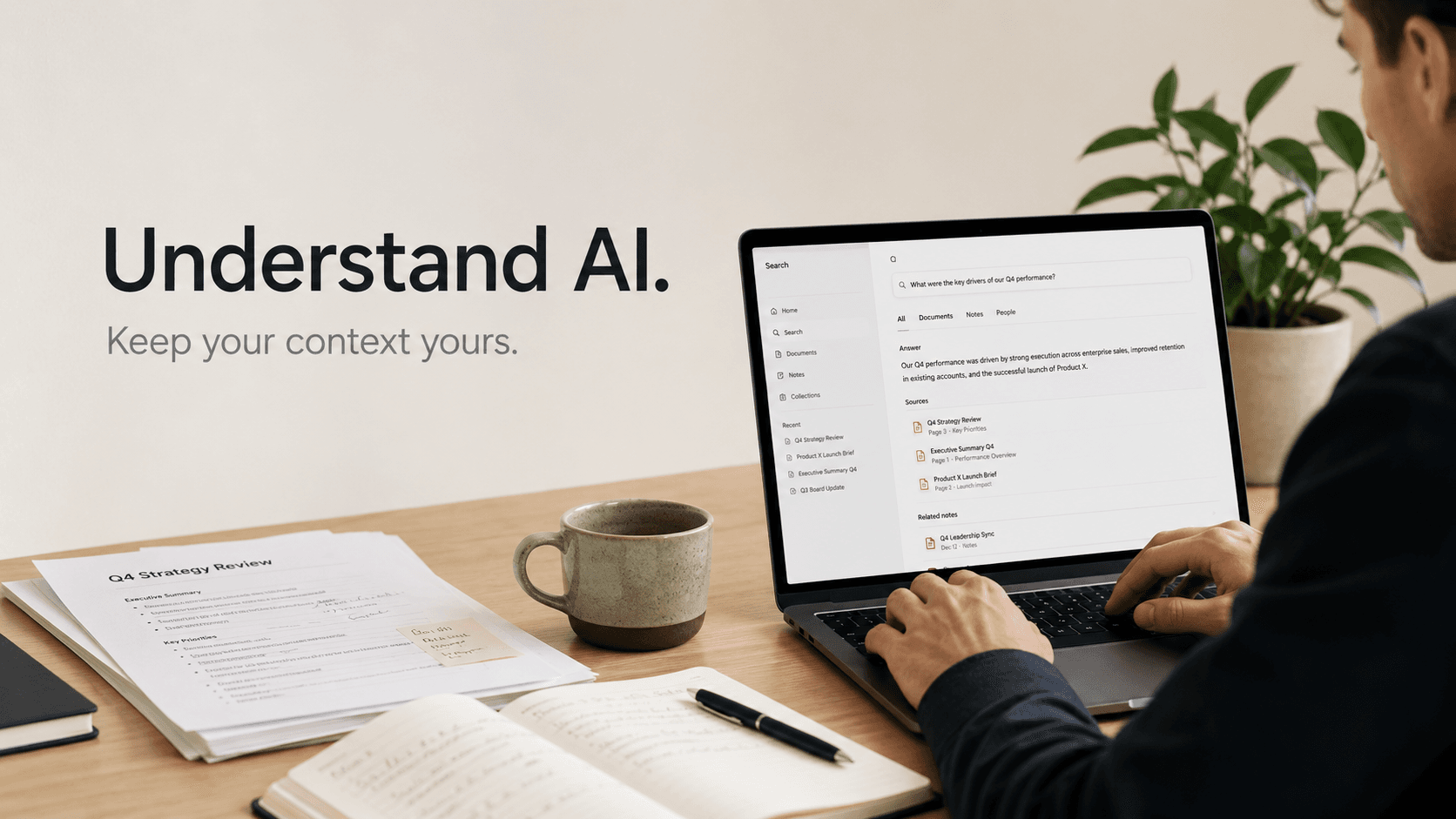
The short answer
Sovereign AI is an AI system that runs on infrastructure you control, using data that remains inside a boundary you choose. You decide which models are used, what information they can access, and who can see the results.
What makes an AI system sovereign?
The word sovereign means self-governing. Applied to AI, it means the architecture gives you control instead of asking you to rely on a vendor promise.
- Infrastructure control: the system runs on your device, your servers, or dedicated infrastructure.
- Data control: documents, indexes, and queries stay within the environment you define.
- Model freedom: you can choose, audit, replace, or run models locally instead of being locked to one provider.
Why it matters in everyday work
Sovereign AI is useful anywhere the context is valuable, sensitive, or difficult to recreate: client files, patient records, contracts, financial forecasts, research, internal strategy, or years of project knowledge.
A useful rule of thumb is simple: if you would pause before emailing a document to a stranger, you should understand exactly where an AI tool sends it.
How the ZSearch stack works
- Your documents remain on your machine or infrastructure.
- ZSearch retrieves relevant passages from a local or dedicated index.
- You choose whether generation uses a local model or a connected provider.
- Citations map the answer back to the source so you can verify it.
A practical sovereignty checklist
Before adopting an AI document tool, ask these questions. Clear answers reveal more than a broad privacy claim ever will.
- Where are the original files, indexes, and backups stored?
- Is customer data mixed in shared infrastructure?
- Can the system run without required data egress?
- Can you bring your own model or run one locally?
- Can you export your knowledge base and verify every answer?
Put the principle into practice
Explore a product designed around local-first control and model choice.